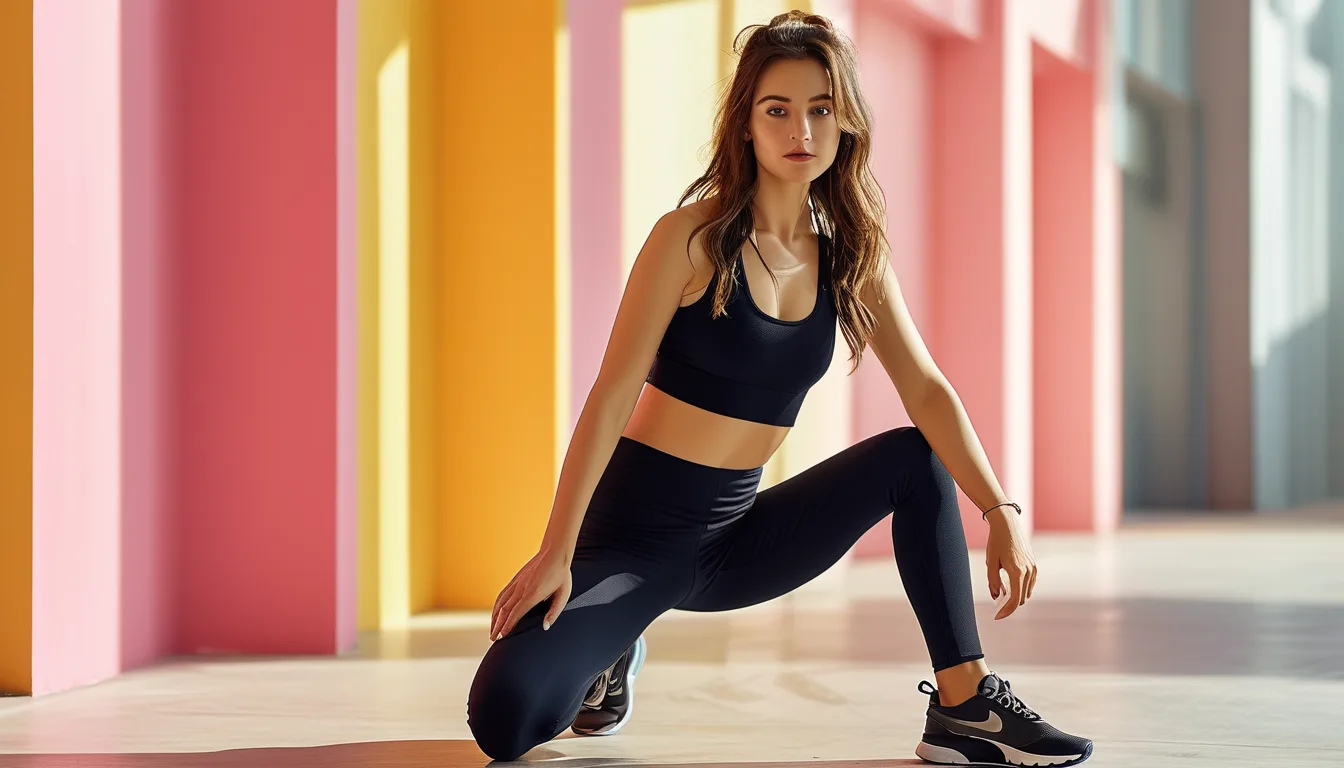
Why the Same Size Legging Fits Completely Differently in Two Fabrics
Quick Answer: Two fabrics with the same nominal size behave completely differently because of stretch percentage, recovery, and whether they stretch in two directions or four. A high-stretch fabric with strong recovery moulds to a shorter leg and takes up excess length in the fit itself. A low-stretch, high-compression or thick fabric cannot absorb excess length, so it bunches at the ankle and pulls at the waist instead. On a petite frame this difference is magnified, because there is more excess length for the fabric to deal with.
The size label describes the pattern. It says nothing about how the fabric will behave once it is on a body.
And for a shorter leg, the fabric is doing most of the work.
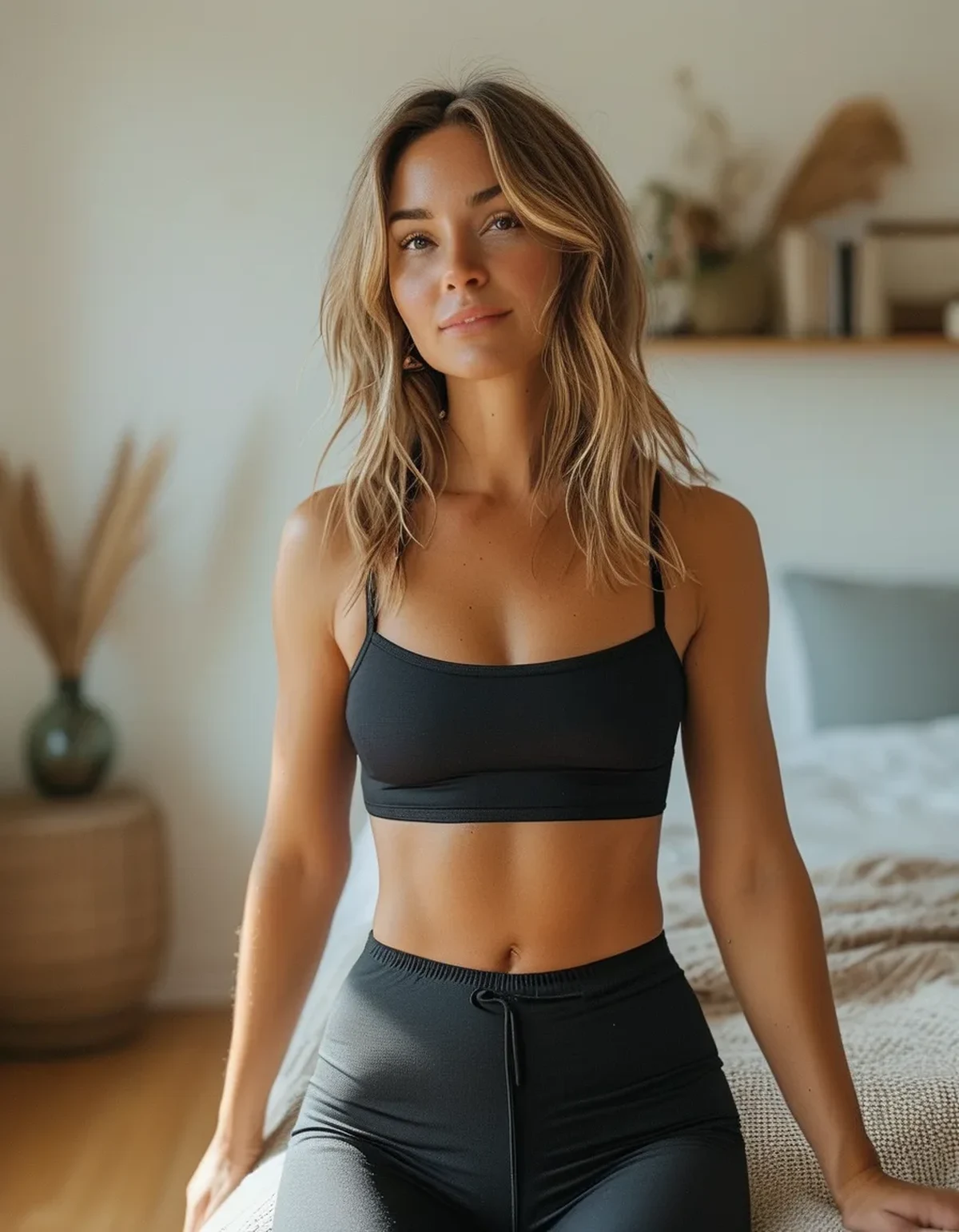
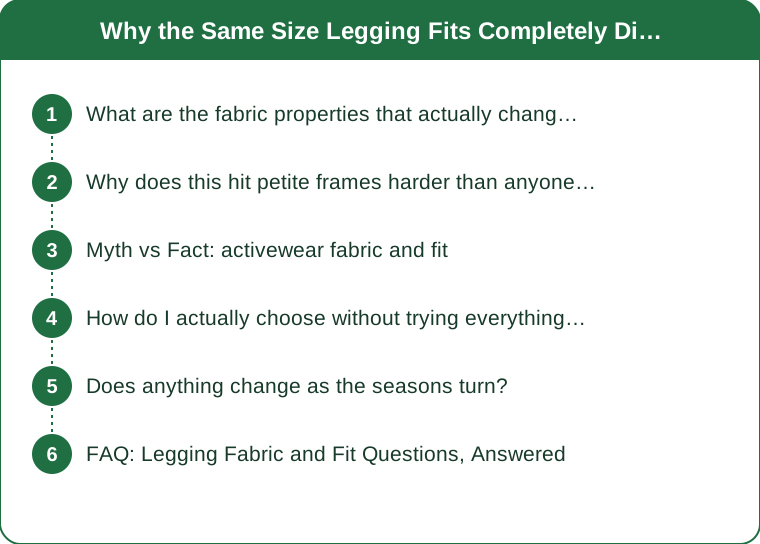
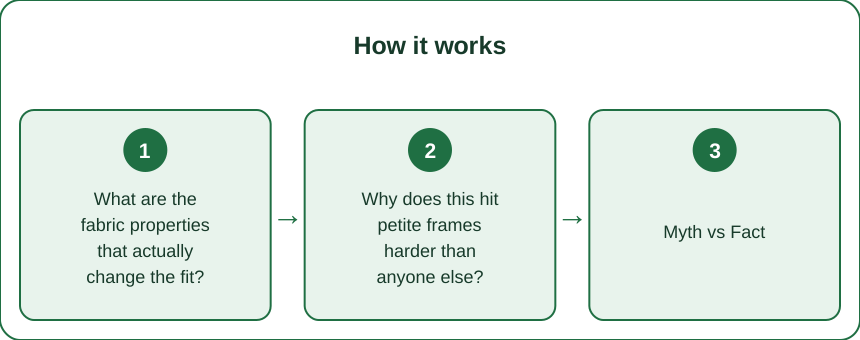
What are the fabric properties that actually change the fit?
Four of them, and none appear on the size label.
Stretch percentage. How far the fabric extends before resisting. A fabric that stretches 60 percent behaves very differently from one that stretches 20, and both are sold as leggings. Higher stretch conforms more closely to the leg’s actual shape.
Recovery. How completely it returns to its original dimensions afterwards. This is the property that matters most and is discussed least. Poor recovery means the fabric stretches out through the day and does not go back, which is the mechanism behind knees that bag and waistbands that slide. Fabrics with a higher-quality elastane and a nylon rather than polyester base generally recover better.
Two-way versus four-way stretch. Two-way stretches across the body only. Four-way stretches both across and along the length. This is the single most relevant property for a petite frame, because a four-way fabric can compress vertically to accommodate a shorter leg, whereas a two-way fabric has fixed length and has to put that excess somewhere — normally in horizontal folds at the ankle.
Weight and thickness. A thick, dense fabric physically cannot fold into a small space. The same three centimetres of excess length that disappears invisibly in a light fabric creates a visible ring of bunching in a heavy one.
So which combination fits a petite frame best?
Generally a four-way stretch, mid-weight fabric with strong recovery — which is also, unhelpfully, one of the more expensive constructions. It absorbs excess length, holds its shape and does not bunch.
Why does this hit petite frames harder than anyone else?
Because the problem is proportional to the amount of excess length, and petite frames have the most of it.
A standard legging inseam is typically drafted for around 168 to 172cm of height. Someone at 157cm may be carrying six to ten centimetres of excess length in the leg. That fabric has to go somewhere.
What happens to it depends entirely on the fabric:
In a high-stretch four-way fabric, it distributes along the whole leg. The fabric is slightly less stretched at every point, which is invisible, and the fit reads as intentional.
In a two-way or low-stretch fabric, it collects at the point of least resistance — usually just above the ankle, sometimes behind the knee. This produces the horizontal concertina folds that make an otherwise good legging look wrong.
In a thick fabric, the same excess creates a visible bulk that also affects how the garment sits inside a shoe or boot.
There is a second-order effect that catches people out: excess length pulls the waistband down. Fabric that cannot compress vertically transmits tension upward, so the waistband is being pulled toward the floor all day. That is the actual reason many petite wearers find waistbands roll or slide — not the waistband, the inseam.
Which means: if a waistband keeps sliding down, check the length before you blame the waist. A cropped or 7/8 length version of the same legging frequently solves a waistband problem entirely, which sounds unrelated and is not.
Myth vs Fact: activewear fabric and fit
Myth: A tighter size fixes a length problem. Fact: It makes it worse. A smaller size stretches the fabric further, which means more tension pulling the waistband down and more compression at the ankle where the fabric already cannot go anywhere.
Myth: All leggings are four-way stretch. Fact: Many are not, particularly thicker fabrics, printed fabrics and lower-priced ones. Printed fabrics in particular often have less vertical stretch because of how they are constructed and finished.
Myth: Squat-proof means good quality. Fact: It means opaque under stretch, which is about density and knit structure. It says nothing about recovery, and a dense fabric with poor recovery is a common and disappointing combination.
Myth: Higher elastane content is always better. Fact: Elastane provides stretch; the base fibre and the knit structure provide recovery and durability. Nylon-elastane generally recovers better than polyester-elastane at similar percentages, and the difference is noticeable after a few months.
Myth: Bunching at the ankle just means they are too long. Fact: Length is the input; the fabric decides whether it shows. Two pairs with identical inseams can look completely different on the same person.
Myth: Compression fabrics fit petite frames better because they hold everything. Fact: High-compression fabrics are usually lower-stretch by design, which means less ability to absorb excess length. They frequently fit petite frames worse, not better.

How do I actually choose without trying everything on?
A practical method for buying, particularly online.
- Look for a stated inseam measurement, not just a size. Brands that list inseams are much easier to buy from, and 7/8 or 25-inch options exist for exactly this reason.
- Read the fibre content. Nylon-based fabrics generally recover better than polyester-based ones. Elastane in the 18 to 25 percent range usually indicates a genuinely stretchy fabric.
- Look for the phrase four-way stretch, and treat its absence as meaningful.
- Be cautious with printed fabrics if length is your issue — they frequently have less vertical stretch.
- Buy the cropped version deliberately. A 7/8 length on a taller frame is a full length on a petite one, and it removes the entire problem.
- Test recovery at home. Stretch a section, release it, and see whether it returns immediately and fully. A fabric that stays slightly stretched will bag at the knees within a month.
- Judge fit at the end of the day, not in the first ten minutes. Recovery problems only show after hours of wear.
And the ankle test that tells you most: put them on, and look at the ankle from the side. Vertical folds are the fabric conforming; horizontal folds are excess length that has nowhere to go. Vertical is fine. Horizontal will not improve with wear.
Can leggings be hemmed?
Yes, and it is inexpensive. A tailor with a coverstitch machine can shorten most leggings cleanly. It is worth doing on a pair you otherwise love, and it also fixes the waistband-sliding problem described earlier.
Does anything change as the seasons turn?
It does, and the change works against petite fit specifically.
Autumn and winter fabrics get thicker. Brushed interiors, fleece linings and heavier knits all arrive in the next few weeks, and thickness is the property that makes excess length most visible. A fabric that hid three centimetres invisibly in summer will show it clearly in a brushed winter weight.
Lined fabrics often have less stretch. A brushed or bonded lining reduces the fabric’s ability to extend and recover, particularly vertically. So autumn leggings frequently fit worse on a petite frame than summer ones from the same brand.
Boots enter the picture. Excess length that was tolerable in trainers becomes a genuine problem inside a boot shaft, where bunched fabric creates pressure points and makes the boot fit badly. This is the single most common autumn complaint and it is solved by length, not by the boot.
Layering changes the waistband situation. A longer top over the waistband hides rolling but does not stop the downward pull, so the legging still migrates through the day.
What to do over the next few weeks:
- Buy the cropped or 7/8 version of any thick autumn legging, deliberately, even if you wear full length in summer.
- Check the ankle inside your actual boots before deciding, not barefoot.
- Prioritise recovery over thickness for anything you will wear all day. A thinner fabric with good recovery outperforms a thick one with poor recovery in every respect except immediate warmth.
- Consider hemming your best summer pairs now if they will carry through, since a tailor is cheaper than replacing them.
Are fleece-lined leggings worth it for a petite frame?
They are warm and they are the worst case for excess length. If you want them, buy short and accept that the fit will be less refined than a lighter pair.
FAQ: Legging Fabric and Fit Questions, Answered
Why do my leggings slide down when the waistband is tight?
Usually excess leg length pulling downward. Try a shorter inseam before trying a smaller size.
What does four-way stretch actually mean?
The fabric stretches both horizontally and vertically. Two-way stretches in one direction only, normally across the body.
How can I tell recovery quality before buying?
Fibre content is the best proxy — nylon-elastane usually beats polyester-elastane. Otherwise, reviews mentioning bagging at the knees after a few weeks are the clearest signal.
Is bunching at the ankle ever a style?
Deliberately scrunched ankle detailing exists and is designed with the volume distributed evenly. Accidental bunching is uneven and sits in one band, and it looks different.
Does washing affect fit?
Significantly. Heat damages elastane, so hot washes and tumble drying accelerate recovery loss. Cold wash and air dry roughly doubles the useful life of a good pair.
Should I size up for comfort?
Rarely, on leggings. Sizing up reduces the fabric’s tension against the body, which is what holds it in place, and usually makes sliding worse.
TL;DR:
- Stretch percentage, recovery, four-way versus two-way, and thickness decide fit far more than the size label does.
- Petite frames carry six to ten centimetres of excess length, and the fabric decides whether that disappears or bunches.
- Excess length pulls the waistband down — if yours slides, check the inseam before blaming the waist.
- Horizontal folds at the ankle mean excess length; vertical folds are normal.
- Nylon-elastane generally recovers better than polyester-elastane.
- Buy the 7/8 or cropped version deliberately, and get favourites hemmed — it is inexpensive.
- Autumn fabrics are thicker and less stretchy, and boots make excess length a real problem. Buy shorter now.
The size was never the variable. The fabric was doing all the work, and one of the two pairs was not built to do it.
See It in Motion
Seen here: Super High Waist Embossed Yoga Leggings with Inner Pocket — shop it on bubblelime.com
Keep Reading
This article is for general informational and styling purposes only. Fit, sizing, and product availability may vary.