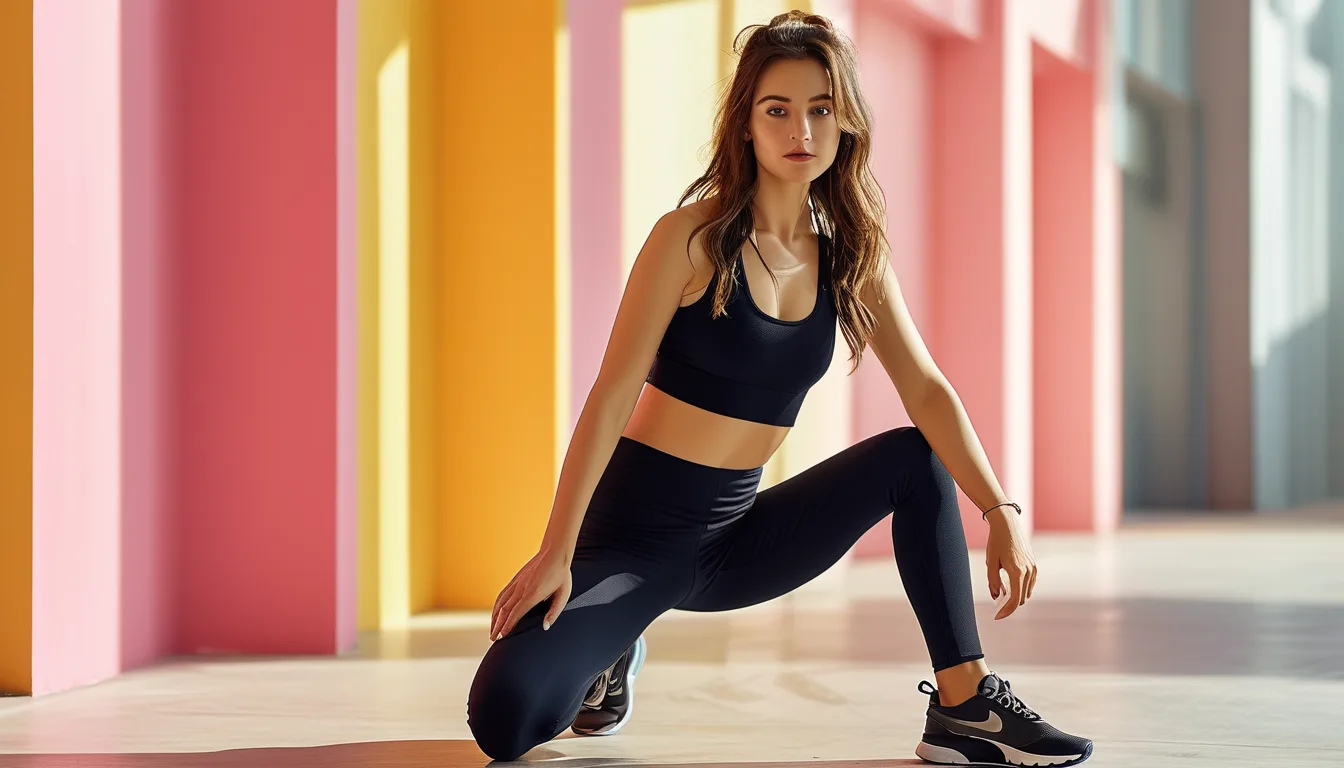
Petite Proportions: Why Crop Tops and Sleeves Never Land Where They Should
Quick Answer: Standard activewear is drafted for roughly a 5’6” to 5’8” frame, and the length is distributed proportionally across the whole garment. On a petite frame, a crop top lands at the natural waist instead of above it, sleeves cover part of the hand, and shoulder seams sit outside the shoulder. Fix it by shopping the petite line where it exists, choosing shorter-than-you-think crops (the standard version will sit lower on you), preferring raglan or drop-shoulder cuts that hide seam placement, and picking 3/4 sleeves rather than fighting full-length ones.

Why does standard sizing land wrong on a petite frame?
Because grading — the process of scaling a pattern across sizes — mostly changes width, not length. A size small and a size large in the same style often differ by less than an inch in body length, while differing by several inches in circumference.
That means going down a size does not shorten a top meaningfully. It just makes it tighter and marginally shorter, which is why sizing down to fix length produces a top that is too snug and still too long.
More importantly, the length that does exist is distributed for a taller torso. If a crop is drafted to sit two inches above the natural waist on a 5’7” fit model, the same absolute measurement lands at or below the natural waist on someone 5’2”, because that person’s waist is higher off the ground.
The same logic applies upward. Shoulder seams are placed for a wider shoulder-to-shoulder measurement and drop outside the shoulder point on a smaller frame — which then makes the sleeve effectively longer, because the sleeve starts lower.
So it compounds: the shoulder is off, which pushes the sleeve down, which makes the cuff cover the hand. Three problems that all trace back to one drafting assumption.
What actually works for crop length?
Buy shorter than looks right on the hanger. A crop that appears very short flat will land where a moderate crop lands on you. This is counterintuitive and it is the single most useful adjustment.
Look for a stated length measurement, not a description. Front length from shoulder to hem is the number that matters. Many brands list it; compare it against a top you already own that fits.
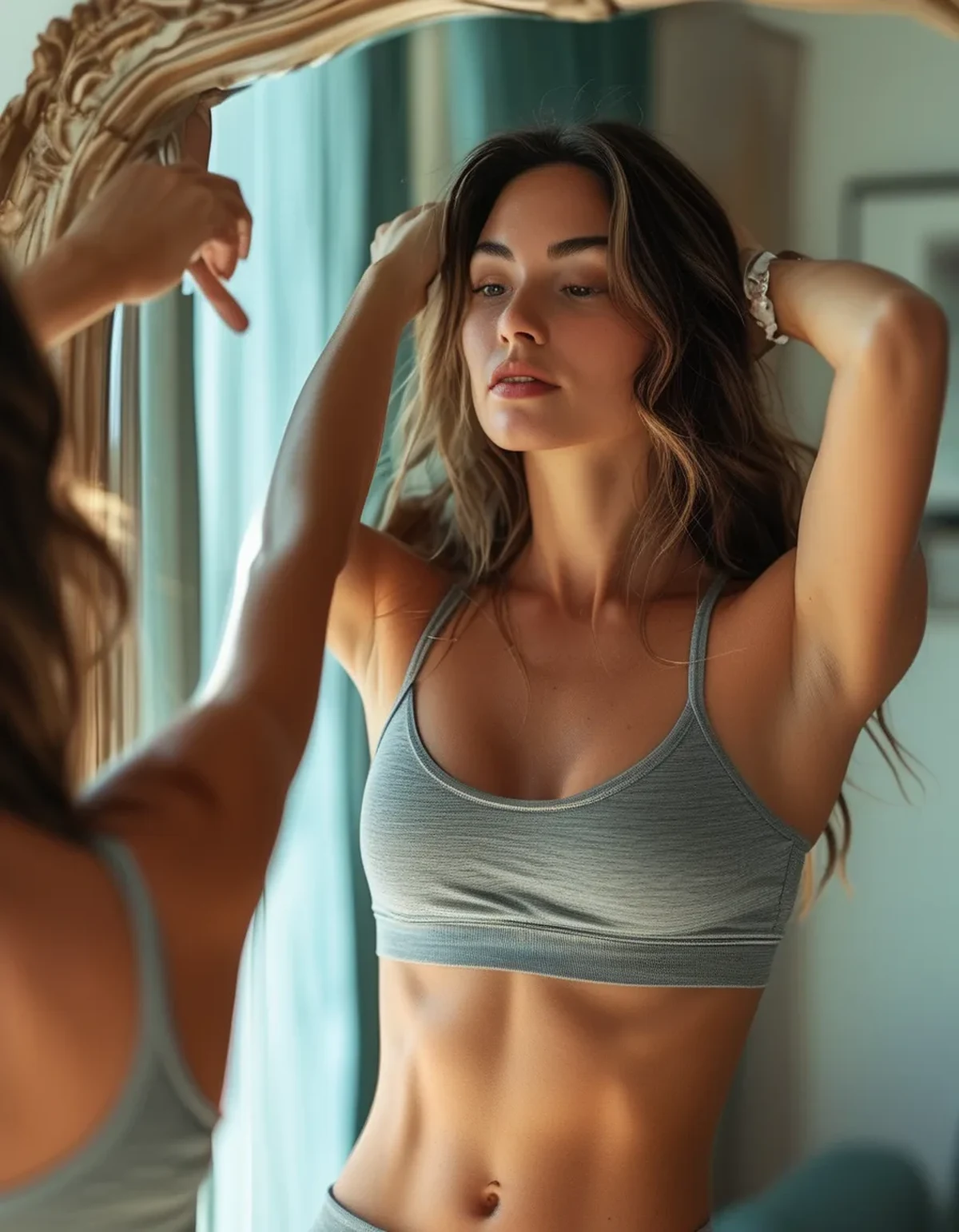
Longline sports bras often work better than crop tops on petite frames, because they are drafted from the bust down rather than the shoulder down, so the vertical error is smaller.
Watch the rise interaction. A crop that sits an inch too low plus a high-rise legging that sits an inch too high produces zero visible gap — which is fine if that is what you wanted, and disappointing if you were going for the cropped look. The two garments have to be chosen together.
Hemming a knit crop is possible with a coverstitch, and it is one of the more successful stretch alterations, since there is no fit change involved — only length.
And on proportion generally: a shorter crop with a high-rise bottom raises the apparent waistline, which lengthens the leg. That is the reason to get it right, beyond just the fit.
How do you handle sleeves and shoulders?
Raglan sleeves are the easiest answer. The seam runs diagonally from the underarm to the neckline rather than sitting on the shoulder point, so there is no seam to land in the wrong place. The fit is far more forgiving of a narrower shoulder.
Drop shoulder works for the same reason — the seam is intentionally off the shoulder, so being further off reads as the design rather than a mistake.
Set-in sleeves are the hardest. The seam is meant to sit exactly at the shoulder point, and when it sits an inch outside, the whole armhole drops and the sleeve gains effective length.
For sleeve length specifically:
Choose 3/4 or bracelet length deliberately rather than accepting full-length sleeves that cover your hands. A 3/4 sleeve on a standard garment often lands as a near-full sleeve on a petite frame, which is exactly right.
Thumbholes are a genuine workaround — they anchor the cuff at a fixed point, so extra length gathers at the wrist rather than swallowing the hand.
Push-up or ruched sleeve details turn excess length into a design feature.
Cuffed sleeves with a ribbed band can be shortened by a tailor more easily than a plain hem, since the band is removed and reattached.
What Nobody Tells You About Petite Activewear Fit
Petite lines are not just shorter — they are re-drafted. A true petite pattern moves the bust point, the armhole depth, and the waist position, not only the hem. That is why a petite-line garment fits differently from a hemmed regular one.
Armhole depth is the underrated measurement. A too-deep armhole restricts overhead movement and gapes at the side. If tops feel wrong but you cannot say why, this is often it.
Sports bra band length matters more than cup. Many petite frames have a shorter distance from underbust to shoulder, so a longline bra can ride up into the underarm. Check band height, not just size.
Legging inseam is the easiest fix and the one people over-focus on. Plenty of brands offer short inseams now. Torso and shoulder are the harder problems, and they get less attention.
Vertical seam lines help. Panel seams that run up the garment draw the eye vertically, which counteracts the horizontal-heavy look that too-long tops create.
One-size accessories are rarely one size. Headbands, arm sleeves, and elastic waist belts are graded for the same standard frame.
FAQ: Petite Fit Questions, Answered
Should I just buy children’s sizes?
Rarely worth it. Kids’ patterns are drafted for a different body shape entirely — no bust accommodation and different hip-to-waist ratios. The length may be right and nothing else will be.
Is hemming activewear worth the cost?
For bottoms, usually yes, and it is a straightforward alteration with a coverstitch. For tops with shaped hems or side seams, it is more involved and worth reserving for pieces you love.
Why do high-rise leggings sit at my ribs?
Because rise is drafted for a longer torso. This is the same problem as the crop top, from the other direction. Look for mid-rise in standard sizing, or high-rise in a petite line.
Do I need to size down as well as buy petite?
Usually not. Petite lines adjust length while keeping the same circumference grading, so your normal size in a petite line should fit through the bust and hip.
TL;DR:
- Grading changes width far more than length, so sizing down does not fix a too-long top.
- Buy crops that look shorter than seems right on the hanger — they land lower on a petite frame.
- Prefer raglan and drop-shoulder cuts, which hide shoulder-seam placement entirely.
- Choose 3/4 sleeves and thumbholes rather than fighting full-length cuffs.
- Armhole depth and sports bra band height are the overlooked measurements.
The fixes are mostly about choosing differently, not altering. Once you know the garment is drafted for someone four inches taller, the right choices become obvious.
See It in Motion
Seen here: UPF 50+ Short Sleeve Rashguard Swim Shirt — shop it on bubblelime.com
Keep Reading
This article is for general informational and styling purposes only. Fit, sizing, and product availability may vary.