Why Full-Length Leggings Pool at Petite Ankles, and the Inseams That Fix It
Quick Answer: Standard full-length leggings carry a 27 to 29 inch inseam, drafted for a 5’6-and-up leg. A petite leg typically needs 23 to 26 inches, and the surplus has nowhere to go but stacked folds above the ankle — dragging the knee panel low, sliding the waistband down, and adding bulk at the exact point where a clean line matters most. The fixes, in order of reliability: buy by inseam number instead of size letter, use 7/8 and capri cuts as full-length, and know that the accordion is a length problem no amount of size-swapping solves.
Sizing down to fix pooling — the most common instinct — is precisely the wrong lever. Here is the right one.

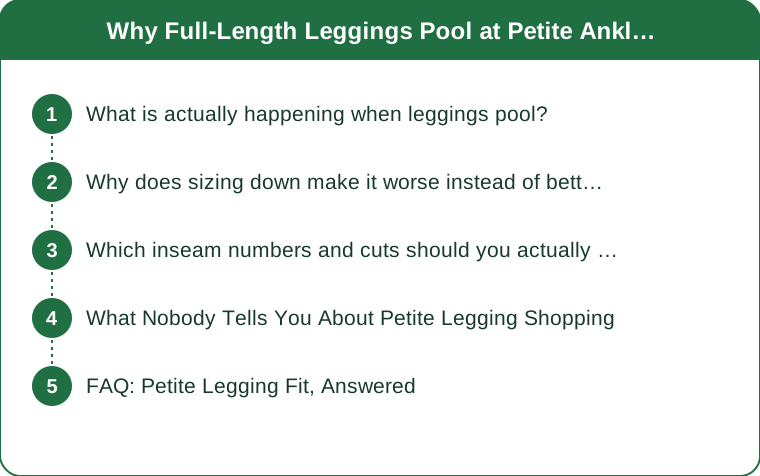
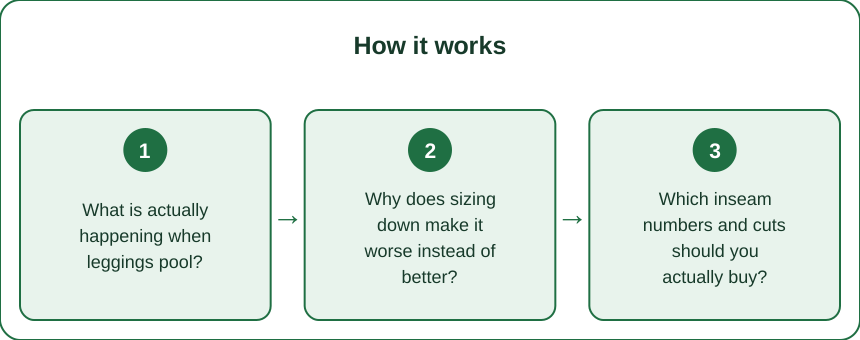
What is actually happening when leggings pool?
A garment built for a longer leg, resolving the difference at the bottom.
Most standard-range yoga pants and leggings are drafted on a fit model around 5’7 with a 28-inch-plus inseam. Stretch fabric forgives width generously — which is why the size chart seems to work — but length has no forgiveness mechanism: every inch the pattern carries beyond your leg becomes physical surplus fabric, and gravity files it above your ankle as stacked horizontal folds.
The accordion is only the visible symptom. The surplus distorts the whole garment down the chain:
The knee panel lands below your knee. Leggings are engineered with extra articulation and often seaming at the knee zone. On a shorter leg that zone sits low, so the fabric designed to bend where you bend instead bunches behind the knee — the wrinkle-nest that appears the moment you sit.
Compression lands in the wrong places. Graduated knits calibrate their squeeze to leg zones by length; shift everything down an inch or three and the calf compression grips your ankle while the thigh zone sags.
The waistband pays last. Fabric under tension seeks equilibrium — surplus below drags the garment down with every stride, and you re-hoist the waistband all day, blaming it unfairly.
One number explains the entire cluster, and it is printed in the product details most shoppers never open: the inseam.
Why does sizing down make it worse instead of better?
Because a smaller size shrinks every dimension except the one that is wrong.
Size letters move width — waist, hip, thigh circumference. Inseam typically changes little or not at all between sizes of the same style; an XS and a M of the same legging often carry the same 28-inch inseam. Sizing down to cure pooling therefore delivers a tighter waistband, thigh compression that reads squeezed instead of held, a rise now too short to stay put in a squat — and the identical accordion at the ankle.
The failed experiment usually runs one more round: a different brand, same standard inseam, same result, and the shopper concludes her body is the problem. The body is fine. The variable was never on the size chart she was reading.
What sizing down also costs is opacity and recovery. Stretch knits are engineered to perform at a target stretch percentage; over-stretched, thin zones go sheer under load — the squat-proof legging that suddenly is not — and the fabric fatigues faster at the over-worked points.
The correct mental model: choose the size letter by your width, exactly as the chart says, and separately choose the length by your inseam number. Two independent decisions. Brands increasingly support the second one — the same legging offered in multiple lengths — but only for shoppers who know their number, which takes one minute and a measuring tape: crotch seam to the floor along the inside of the leg, barefoot, minus about an inch for where you want the hem to kiss the ankle.

Which inseam numbers and cuts should you actually buy?
Translate height into targets, then exploit the cut system.
The working table for full-length fit: around 4’11 to 5’1, look for 23 to 24 inch inseams; 5’1 to 5’3, 24 to 25; 5’3 to 5’5, 25 to 26.5. Leg-to-torso ratios vary, so your measured number outranks the table — but the table gets the first order right.
The 7/8 trick is the petite cheat code. A standard-range 7/8 legging carries a 24 to 25 inch inseam by design — which is a petite full-length, sold everywhere, in every colorway. Buying 7/8 as your full-length instantly fixes pooling in brands with no petite line. Capri cuts run the same conversion one step further: a 19 to 21 inch capri wears as a clean crop just below the knee or mid-calf — landing at the taper, not the widest point.
Petite-specific lines do the full re-draft — knee articulation raised, compression zones re-mapped, rise adjusted — and are worth it for buttery-soft fabrics that show every distortion when misplaced. The 7/8 conversion fixes length; the petite draft fixes everything downstream of it.
Bootcut and flare need the shoe decision first. Flared hems are meant to break over a shoe, so buy bootcut leggings to the shoe you will wear — with sneakers, the hem should hover just off the floor at the back. Petite-length flares exist and are dramatically easier than hemming a flare, which disturbs the sweep.
And one rescue for pairs you already own: a single interior fold at the ankle, pressed once, wears cleanly under mid or high-top sneakers — a real fix for otherwise-perfect leggings while the replacements ship.
What Nobody Tells You About Petite Legging Shopping
The inseam is in the details tab, not on the tag. Most product pages list it under specifications; most shoppers never scroll. Reading that one line before checkout eliminates the majority of returns this category generates.
Two lengths from one brand beats five brands at one length. Once a brand’s draft fits your hips, buying your inseam across their length range compounds — same fabric trust, same size letter, solved length. Brand-hopping resets all three variables every time.
Petite is a length, not a size. The persistent myth that petite lines run small in the body keeps taller-than-average-hipped petite shoppers away from their correct rack. Petite drafts shorten and re-map; width runs the same chart. Size letter by width, always.
Ankle pooling ages fabric early. The stacked zone abrades against itself and your shoe collar with every step — it is why worn-out petite leggings die at the ankle while the same legging on a taller leg dies at the inner thigh. Correct length is quietly a durability purchase.
The mirror check that settles everything is a squat and a sit. Right-length leggings crease once, softly, at the front ankle when standing, and the knee panel returns to your knee when you rise from a chair. If the fabric needs a mid-day hoist at the waistband, the length — not the waistband — is still wrong.
FAQ: Petite Legging Fit, Answered
What is the fastest way to measure my inseam accurately?
Stand barefoot against a wall, place a hardcover book snug at the crotch seam height, mark the book top, and measure floor to mark. Subtract half an inch to an inch for hem preference. Two minutes, done once, used forever.
Are petite lines worth it over the 7/8 trick?
For plain styles, the 7/8 conversion covers most of the benefit free. For compression-mapped, seamed, or knee-articulated designs — and for buttery-soft knits that pool visibly — the petite re-draft is the difference between fitting and merely being short enough.
My leggings fit perfectly except they slide down. Length or waistband?
Test it: fold the ankle surplus up temporarily and wear an hour. If the sliding stops, the surplus was dragging the garment down — length problem. If it continues, the rise or waistband elastic is the culprit. The fold test costs nothing and ends the guessing.
Do I hem leggings like trousers?
Plain-hem styles hem fine with a stretch stitch or a tailor’s coverstitch — worth it for premium pairs. Avoid hemming anything with ankle zips, mesh panels, or graduated compression, where the construction is the hem. For those, buy the length right or apply the interior fold.
TL;DR:
- Pooling is surplus inseam — standard leggings run 27 to 29 inches; petite legs need 23 to 26 — and sizing down cannot fix a length problem.
- Buy the size letter by width and the length by your measured inseam: two independent decisions.
- The 7/8 cut is a petite full-length hiding in plain sight; capris convert to clean crops; bootcut gets bought to the shoe.
- Right length restores the knee panel, the compression map, and the waistband — and doubles the life of the fabric.
Measure your inseam tonight — one book, one tape, two minutes — then check the number printed in the details of your favorite legging. The gap between those two figures has been the whole problem all along.
See It in Motion
Seen here: Super High Waist Embossed Yoga Leggings with Inner Pocket — shop it on bubblelime.com
Keep Reading
This article is for general informational and styling purposes only. Fit, sizing, and product availability may vary.