Why Petite Jacket Sleeves Bunch at the Wrist Over a Long Sleeve Top
Quick Answer: Two sleeves both cut a bit long for your arm end up fighting for the same few centimetres. The base layer cuff catches on the jacket lining, so instead of sliding it pushes fabric into a concertina at the narrowest point of your arm - which is exactly where the wrist bone is. The fixes are a base layer with a genuinely fitted cuff, a slippery lining, and accepting that one of the two sleeves needs to be shorter - usually the base layer.
It is a layering geometry problem rather than a sizing one, which is why sizing down does not fix it.
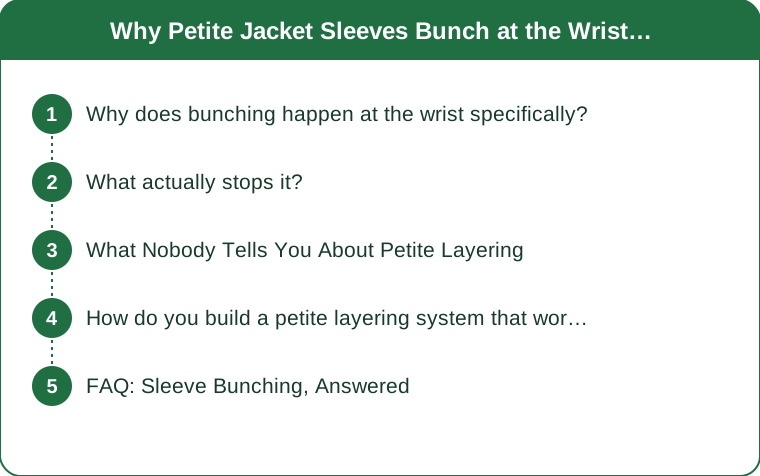
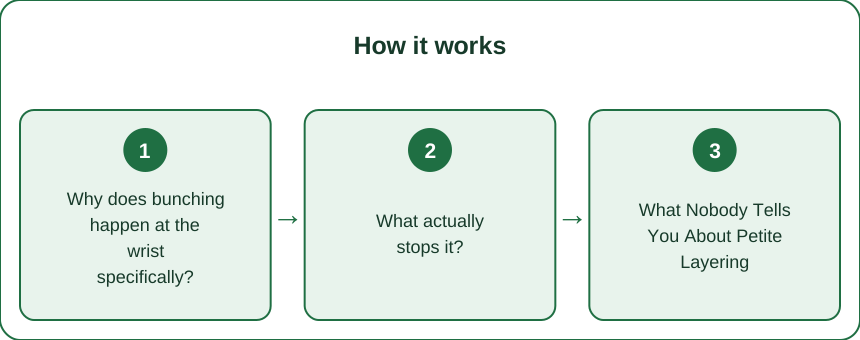
Why does bunching happen at the wrist specifically?
Because that is where the arm narrows and both sleeves are still wide.
Your forearm tapers toward the wrist. Sleeve fabric that was in contact with your arm higher up loses contact as the arm narrows. The excess has nowhere to go except into folds, and the folds gather at the point where the taper is steepest.
Friction between layers stops the fabric sliding. A cotton or jersey base layer against a fabric jacket lining creates enough friction to grip. When you bend your elbow, the jacket sleeve moves and the base layer does not - or vice versa - and each movement pushes a little more fabric toward the wrist.
Petite arms compound it because both sleeves are already long. A standard base layer overshoots your wrist by a few centimetres and so does the jacket. You are now trying to fit two sets of excess into the same space. On a longer arm, the same two garments would end at roughly the right place and there would be no surplus to gather.
And it accumulates through the day. Every arm movement ratchets fabric downward a little. The outfit that looked correct at 9am has visibly bunched by 11, which is why the problem feels intermittent.
The narrower the jacket cuff, the worse it gets - a fitted jacket cuff acts as a stop, so all the base layer excess piles up behind it.
What actually stops it?
Five fixes, in order of how completely they solve it.
1. A base layer with a genuinely fitted cuff. Ribbed, elasticated, or thumbhole cuffs grip the wrist and stop the sleeve migrating. This is the single most effective fix - the base layer stays put and the jacket slides over it.
2. A shorter base layer sleeve. If the base layer ends above the jacket cuff, there is nothing to bunch. Three-quarter or bracelet-length base layers under a jacket work beautifully and are underused for exactly this.
3. Slippery fabrics against each other. A smooth base layer - fine merino, silk blend, or a technical knit - slides against a lining instead of gripping it. Cotton jersey and brushed fabrics are the worst offenders, and fleece is the worst of all.
4. A fully lined jacket rather than a partly lined one. Unlined sleeves are the main cause. A jacket with a slippery sleeve lining lets the base layer pass through, which is why unlined blazers and unlined coats bunch far more.
5. Thumbholes. They anchor the base layer completely. Slightly casual for a tailored jacket, and completely effective for anything else.
What does not work: sizing up the jacket, which adds more sleeve to bunch; pushing both sleeves up, which lasts about ten minutes; and choosing a shorter jacket, which is unrelated. The problem is at the cuff, so the fix has to be at the cuff.

What Nobody Tells You About Petite Layering
Three layers is the point where it collapses. Two layers usually work with a fitted base cuff. Three - base, mid, jacket - almost always bunches because there is simply too much fabric for the space. On a petite frame, two well-chosen layers beat three compromised ones for both look and warmth.
Warmth does not require bulk at the wrist. The wrist is not where you lose heat, and a thinner layer at the forearm with a thicker one at the torso is both warmer and cleaner. Base layers that are fitted at the arm and roomier at the body do exist and are worth seeking out.
The jacket lining tells you more than the shell does. Check it in the changing room. Run your hand up the sleeve - if it grips, the jacket will bunch over almost any base layer.
Cuff detail on the base layer matters more than on the jacket. People check jacket cuffs and buy base layers on color and price. Reverse that priority - the base layer cuff is the piece doing the work.
And a small trick that works surprisingly well: a thin, close-fitting merino base layer with a ribbed cuff, worn under everything through autumn, eliminates the problem across the entire wardrobe rather than jacket by jacket. It is one purchase that fixes a category.
Also worth knowing: as sleeves bunch, they pull the jacket shoulder line down slightly. Some of that borrowed-jacket look you notice is actually the bunching, not the shoulder fit.
How do you build a petite layering system that works?
Bottom-up, since the base layer is the piece doing the most work.
Base layer: fitted, smooth, with a ribbed or elasticated cuff. Merino or a fine technical knit. This is the piece worth spending on because it determines whether everything above it behaves. Two or three of these carry an entire autumn wardrobe.
Mid layer, if used: shorter sleeves or a vest. A gilet or a three-quarter sleeve knit removes an entire layer from the forearm while keeping the torso warm. This is the specific adjustment that makes three-layer dressing viable on a petite frame.
Jacket: fully lined sleeves, cuff at the wrist bone. Check the lining by feel, and get the sleeve altered if the jacket is otherwise right. A shortened jacket sleeve also reduces how much can bunch, so the alteration does double duty.
Test the whole combination with movement. Put on all the layers in the changing room and bend your elbows repeatedly, reach forward, and put your hands in your pockets. Bunching shows up in about fifteen seconds of movement and never in a still mirror check.
And check the combination you will actually wear. Trying a coat over a t-shirt tells you nothing about how it behaves over the jumper you will wear all winter. Take the jumper with you, or try it on over what you have on.
Seasonally: this is the layering problem that arrives in September and gets solved in January by people who spend three months annoyed by it. One fitted base layer now saves the whole season.
FAQ: Sleeve Bunching, Answered
Why do my sleeves bunch more with some jackets than others?
Lining is the main variable. Unlined or partly lined sleeves grip the base layer; a smooth full lining lets it slide. Narrow jacket cuffs also act as a stop, so excess piles up behind them.
Will sizing up the jacket help?
No - it adds more sleeve length and width, which means more fabric available to bunch. The problem is at the cuff, not the overall size.
What base layer fabric is best?
Fine merino or a smooth technical knit with a ribbed or elasticated cuff. Cotton jersey, brushed fabrics, and fleece grip linings and bunch the most.
Do thumbholes actually work?
Yes, very well - they anchor the base layer completely so it cannot migrate. Slightly casual under a tailored jacket, but effective everywhere else.
Can I wear three layers on a petite frame?
Yes, if the middle layer has short or three-quarter sleeves, or is a gilet. Three full-length sleeves in the same forearm space is where it reliably falls apart.
How do I test for this when shopping?
Put on the whole combination and bend your elbows repeatedly, reach forward, and put your hands in your pockets. Fifteen seconds of movement reveals what a still mirror check never will.
TL;DR:
- Bunching happens because two sleeves both cut long for your arm compete for the same narrow space at the wrist, and friction stops them sliding.
- Petite frames get it worse because both garments already overshoot.
- Best fixes: a base layer with a ribbed or elasticated cuff, a shorter base layer sleeve, smooth fabrics, and a fully lined jacket sleeve.
- Sizing up makes it worse - more sleeve means more to bunch.
- Three full-length sleeves rarely work; make the mid layer a gilet or three-quarter sleeve.
- Test by bending your elbows and reaching in the changing room - a still mirror check hides it completely.
One good fitted base layer fixes this across your entire wardrobe rather than jacket by jacket. Buy it in September, not January.
Keep Reading
This article is for general informational and styling purposes only. Fit, sizing, and product availability may vary.