Why Your Petite Leggings Bag at the Ankle Even When the Length Is Right
Quick Answer: Petite leggings bag at the ankle because brands shorten the inseam without moving the point where the leg starts tapering. The narrowest part of the pattern still sits where a taller person’s ankle would be, so on you it lands mid-calf and the fabric below it has nowhere to go. Look for petite-drafted styles, a snug ankle cuff, or a 7/8 length that ends above the problem.
The label says petite. The inseam is correct. And there is still a small accordion of fabric sitting on top of your sneaker.
This is not a length problem, which is why buying an even shorter inseam usually does not fix it. It is a taper placement problem, and once you know what to look for it is easy to shop around.
Here is the mechanism and the fix.

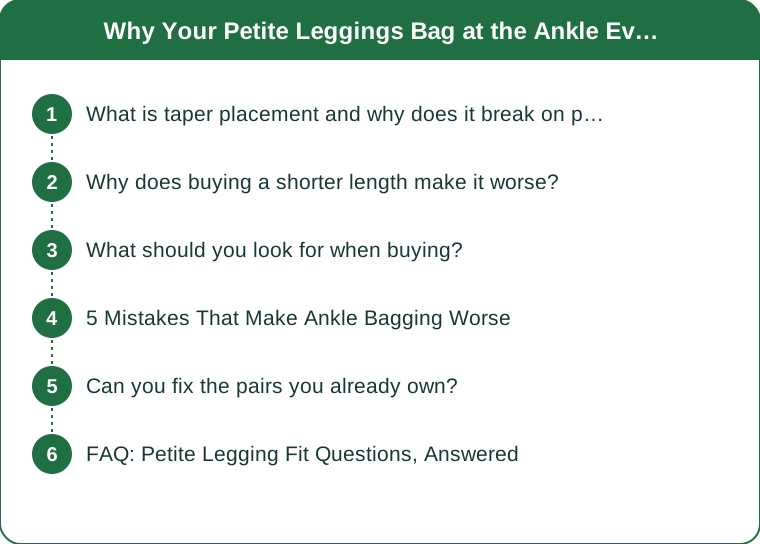
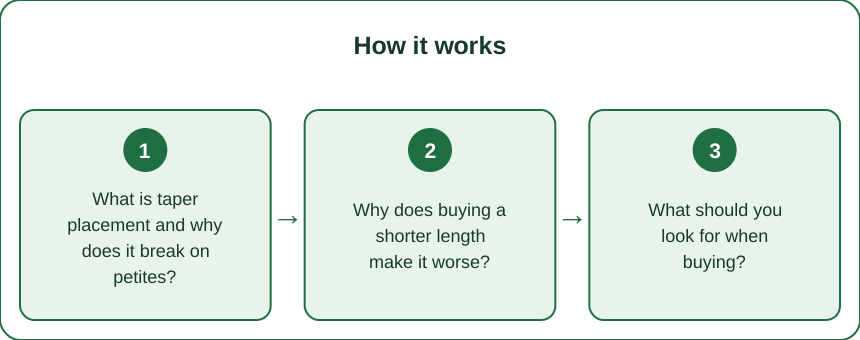
What is taper placement and why does it break on petites?
A legging pattern is not a tube. It narrows progressively from the thigh down, and the narrowing accelerates in the lower third so the fabric grips the ankle rather than flaring.
That acceleration is drafted at a specific distance from the waistband, based on where the pattern assumes your ankle sits.
When a brand makes a petite version, the common shortcut is to remove length from the bottom of the leg — chop the hem — without redrawing the taper curve. The result: the narrowest point of the garment now sits somewhere around your mid-calf, and everything below that is a section of leg that was designed to be a shin, being asked to be an ankle.
Your shin is narrower than the fabric there, so it does not grip. The fabric slides down, meets your shoe, and gathers. That is your accordion.
You can spot it before buying: lay the legging flat and look for where the outer edge visibly starts curving inward. On a well-drafted petite it happens proportionally higher. On a chopped regular, it does not move at all.
Why does buying a shorter length make it worse?
Because you are removing more of the part that was already too wide, without ever reaching the narrow part.
Go shorter and the hem now sits at your lower shin — at a circumference where the pattern is still relatively wide. You have a hem that is even looser relative to the leg it is sitting on, so instead of bagging at the ankle it now slides down and bags at the ankle from a higher starting point.
The version that does work is going shorter still — deliberately to a 7/8 or a true crop that ends mid-calf or above. At that point you are cutting above the problem zone entirely, and a mid-calf hem is not expected to grip, so a slightly loose one reads as intentional rather than as a fit failure.
This is why 7/8 lengths are so reliable on petite frames. A 7/8 on a taller person hits above the ankle bone; on a shorter frame it often hits at the ankle, which is exactly where you want a hem to land — and the taper problem never enters the picture.
What should you look for when buying?
Five things, roughly in order of how much they matter.
- A genuine petite draft, not a shortened regular. The tell is in the product copy: brands that redraft say so, usually mentioning proportional rise and taper. Brands that chop say only “petite length.”
- A defined ankle cuff. A band of tighter, denser fabric at the hem grips regardless of where the taper sits. This is the most reliable single feature and it solves the problem on a lot of otherwise-imperfect leggings.
- 7/8 or crop lengths. Ends above the problem area. On a shorter frame these often read as full length anyway.
- Higher compression fabric. More elastane and a denser knit means the fabric holds its shape against the leg instead of relaxing into folds. Cheap, low-compression leggings bag at the ankle on everyone.
- Stirrup or ruched-ankle designs. Both are engineered to control fabric at the hem. Ruching in particular turns excess fabric into a design feature.
What not to rely on: a size down. It fixes the ankle and creates waistband and thigh problems, and it usually shortens the rise, which is a separate petite headache.

5 Mistakes That Make Ankle Bagging Worse
1. Buying the same style in a smaller size to fix the ankle. You compress the thigh and drop the rise. The ankle improves slightly and two other things get worse.
2. Pulling the leggings up at the waist to shorten the leg. Everyone does it, and it lasts about four minutes. It also pulls the crotch seam up uncomfortably and stresses the waistband.
3. Washing hot and drying hot to shrink them. Heat destroys elastane. You may get a temporary half-inch and you will permanently lose the recovery that was holding the ankle in place. This actively makes the bagging worse over time.
4. Ignoring how old the pair is. Leggings lose recovery after enough wears and washes. If a pair that used to fit now bags, that is fabric fatigue, not fit — and no shopping advice fixes it.
5. Assuming all petite ranges are equal. They vary enormously. One brand’s petite is a full redraft, another’s is two inches off the hem. Find the ones that redraft and stay with them; it is the single highest-value discovery in petite shopping.
Can you fix the pairs you already own?
Partially, and some fixes are genuinely good.
Hemming works, with a caveat. A tailor with a coverstitch machine can shorten activewear properly. The result is a clean hem — but it is still a hem at whatever width the pattern was there, so it addresses length rather than grip. Combine it with the next option for a real fix.
Adding an elastic band to the hem is the actual fix, and any alterations shop can do it. A narrow band of elastic sewn into the hem creates the cuff the garment was missing. Inexpensive and effective.
Ruching the outer seam. A short vertical line of gathering at the ankle takes up excess and looks deliberate. This is a common design feature, so it does not read as a repair.
Tucking into a high sock is the free option and is completely legitimate for training. In autumn it also solves a warmth problem at the same time.
What does not work: anything relying on shrinkage, safety pins, or double-folding the hem, which creates a visible bulge exactly where you were trying to reduce bulk.
FAQ: Petite Legging Fit Questions, Answered
Is a 7/8 length actually full length on a petite frame?
Frequently, yes. Many people under about 5’4” find a 7/8 hits right at or just above the ankle bone — which is exactly where a full-length legging is meant to sit. Trying the 7/8 in your usual brand is the cheapest possible test and it solves the problem outright for a lot of people.
Why does the rise never seem right either?
Same root cause. Rise is a vertical measurement from the waistband to the crotch seam, and brands that chop the hem without redrafting leave the rise untouched. A high-rise on a shorter torso can sit at the ribs. Brands that genuinely redraft for petite adjust rise and taper together, which is why finding those brands matters more than finding a specific style.
Do compression leggings bag less?
Generally yes. Higher elastane content and a denser knit hold shape against the leg rather than relaxing into folds, and they maintain that over more wears. It is one of the clearest cases where a more expensive pair genuinely performs differently rather than just looking different.
TL;DR:
- Ankle bagging is a taper placement problem, not a length problem — brands chop the hem without moving the narrowing point.
- Buying a shorter inseam of the same style usually makes it worse, not better.
- Look for genuinely redrafted petite ranges, a defined ankle cuff, higher compression, or a 7/8 length.
- Do not size down to fix it — you will trade the ankle for the waistband and rise.
- Existing pairs can be fixed by adding elastic to the hem or ruching the outer seam.
The pairs that work are the ones where a brand actually redrew the pattern instead of cutting two inches off the bottom. Find those brands once and the problem stops recurring.
See It in Motion
Seen here: Super High Waist Embossed Yoga Leggings with Inner Pocket — shop it on bubblelime.com
Keep Reading
This article is for general informational and styling purposes only. Fit, sizing, and product availability may vary.