Why Regular-Length Leggings Never Fit Right Under 5'4' (And What Actually Fixes It)
Quick Answer: Regular-length leggings are drafted for a 5’6”-5’7” model, so on anyone under 5’4” the extra 2-4 inches of fabric bunches at the ankle, the rise sits higher on a shorter torso than it was designed to, and the waistband can gap or fold instead of sitting flat. The fix isn’t just buying a “short” size — it’s checking the actual inseam measurement (typically 25-27” for true petite cuts vs. 30-32” standard) and making sure the rise-to-inseam ratio was built for a shorter torso, not just scaled down.
You know the drill: you order leggings in your usual size, they look great in the mirror from the waist up, and then you look down and there’s two inches of fabric puddled around your ankle like an accordion. Or worse, you size down to fix the length and now the waistband is cutting into your ribs because the whole pattern shrank proportionally, not just the leg length. If you’re 5’4” or under, this isn’t bad luck — it’s math. Most activewear is built on a fit block sized for 5’6” to 5’8”, and when a garment made for that frame gets put on a shorter body, every proportion shifts at once.

Why Does the Extra Fabric Pool at My Ankle Instead of Just Being “Long”?
It seems like it should be simple — too-long leggings should just look loose at the bottom, right? But leggings aren’t cut straight; they’re cut with a slight taper and negative ease (meaning the fabric is engineered to stretch to fit your leg, not hang like woven pants). When that tapered tube is 3-4 inches longer than your actual leg, the compressive stretch has nowhere to go, so instead of draping, it collapses into horizontal folds right above your ankle bone. This is the “accordion ankle” look, and it happens even on leggings that fit perfectly everywhere else.
The standard inseam on most “regular” or unlabeled legging sizing runs 30 to 32 inches, which is proportioned for someone 5’6” and taller. If your actual inseam is closer to 26-28 inches (typical for someone 5’0”-5’4”), you’re carrying that difference as bunched fabric, not a stylistic ankle break.
It also changes how the leggings move. Excess fabric at the ankle catches on shoes, bags at the knee when you sit, and creates drag when you walk or work out — it’s not just a cosmetic issue, it affects function. A pair that’s the correct length for your actual leg moves with you instead of shifting and re-pooling every time you take a step.
The real fix is knowing your own inseam (measure from crotch seam to ankle bone in your best-fitting pants) and shopping against that number, not against a size label. A brand’s “medium” tells you nothing about inseam length unless they publish the actual measurement.
Why Does the Waistband Sit So High It Feels Like It’s Under My Bra?
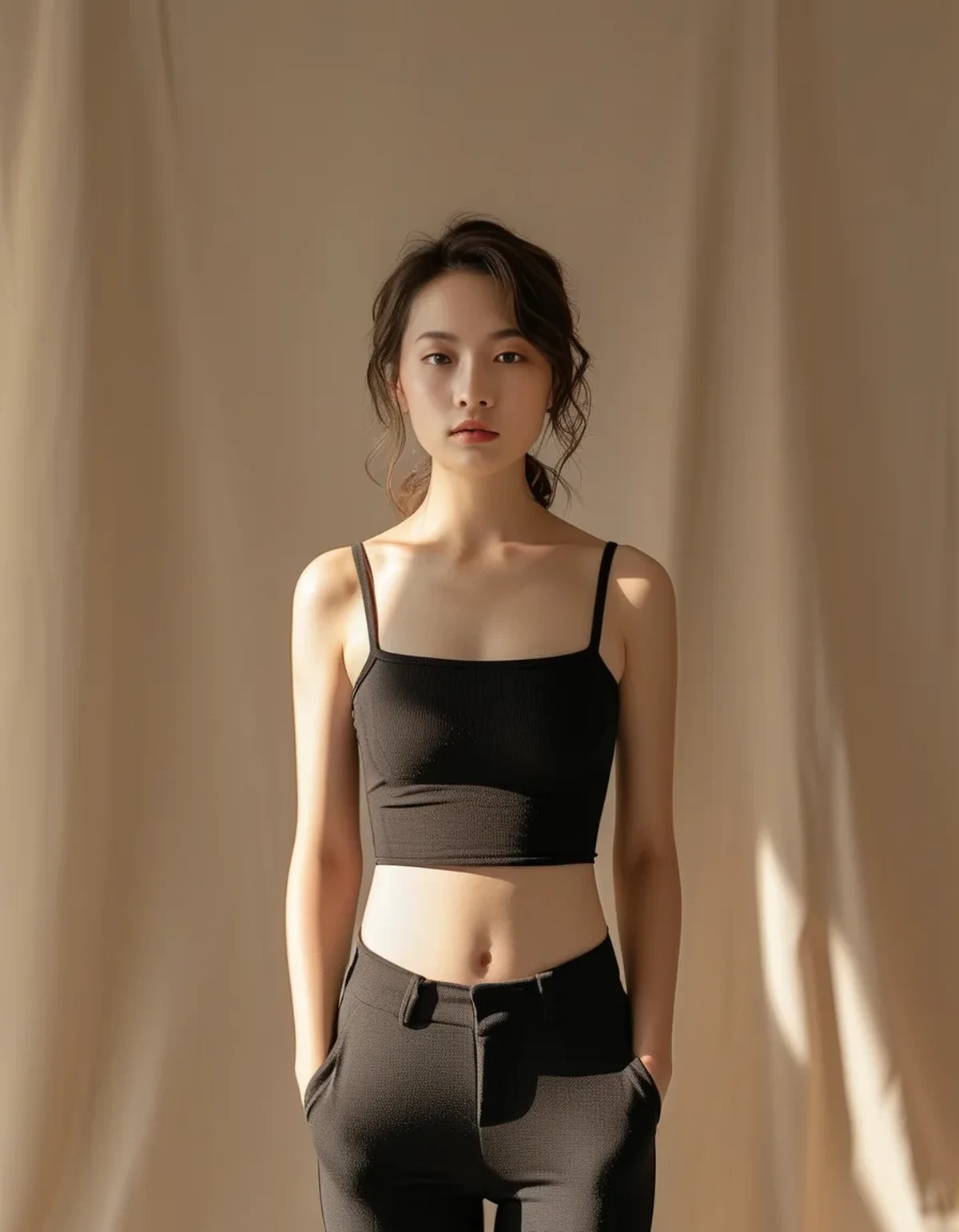
This is the second half of the petite fit problem, and it’s less talked about than the ankle gap. Rise — the distance from crotch seam to waistband — is also drafted for a longer torso. A “high-rise” legging built for a 5’7” frame might measure a 12-13 inch front rise. On a woman with a shorter torso, that same rise doesn’t stop at the natural waist — it keeps climbing, landing closer to the ribcage or even brushing the underbust.
This creates two problems: it feels restrictive when you bend or sit because the waistband is fighting your natural torso proportions, and it visually shortens your midsection, cutting your torso into a smaller-looking segment than it actually is — the opposite of what a “lengthening” high-rise legging is supposed to do.
What to check instead: look for a stated front rise measurement, not just “high-rise” as a marketing term. A true petite-proportioned high-rise typically runs 10-11 inches, roughly 2 inches shorter than standard, so it lands at your actual natural waist instead of overshooting it. Brands that genuinely design for petite frames adjust rise and inseam together, because torso length and leg length are proportionally linked — you can’t just chop leg length off a standard pattern and call it petite-fit, because the rise problem stays exactly the same.
Myth vs. Fact — Does “Petite Size” Always Mean Petite Fit?
Myth: If it’s labeled “petite” or “short,” it’s built for a shorter body.
Fact: A huge amount of “petite” or “short” inseam sizing is just a straight-size pattern with a couple inches trimmed off the leg — the rise, waistband width, and knee placement are untouched. That fixes the ankle pooling but leaves the high-riding waistband problem completely unsolved, and can even make the crotch seam sit lower on your leg than intended since the torso-to-leg ratio wasn’t recalculated.
Myth: Sizing down solves both the length and fit problem.
Fact: Sizing down shrinks circumference (waist, hip, thigh), not length in the way you need. You’ll often end up with leggings that are now too tight through the hip and thigh while still not being proportioned correctly at the rise — you’ve traded one problem for two.
Myth: All “cropped” leggings are a petite solution.
Fact: A cropped legging is a design choice (ending mid-calf or ankle-length on purpose) — it’s not the same as a true petite cut engineered around a shorter inseam-to-height ratio. A crop can still have a too-high rise for your torso; it just hides the ankle-pooling symptom while leaving the underlying proportion issue in place.
What actually works: genuine petite-cut activewear recalculates the entire pattern — inseam, rise, and often waistband height and knee placement — around a shorter overall height, typically designed against a 5’0”-5’3” model rather than adjusting a tall pattern after the fact.
What Numbers Should I Actually Be Checking Before I Buy?
Stop guessing from the size chart’s S/M/L and start comparing two real numbers against your own body:
1. Inseam length. Measure a pair of leggings or leggings-length pants that already fit you well, from the crotch seam to where you want the hem to land. Compare that number directly to the brand’s stated inseam — most petite-specific lines will publish this (commonly 25-27”). If a brand doesn’t list an inseam measurement at all, that’s often a sign they haven’t actually adjusted the pattern for petite frames.
2. Front rise. Measure from your crotch seam straight up to where you want the waistband to sit. A genuinely petite-proportioned high-rise legging should land around 10-11 inches; if the listing only says “high-rise” with no number, assume it’s the standard 12-13 inch block.
3. Inseam-to-height ratio, not just height range. Two women can both be 5’2” with very different leg-to-torso proportions. If a brand offers petite sizing by height and lets you choose inseam length independently (like a 27” vs 25” option within the same size), that’s a stronger signal they’ve actually engineered for proportion, not just shrunk a photo.
Once you have these two measurements, you can screen out mislabeled “petite” products in under 10 seconds by checking the product description before you even add to cart — which saves you the return-and-reorder cycle almost every petite shopper has been stuck in at least once.
FAQ: Petite Legging Fit Questions, Answered
Is there a standard inseam length considered “petite” in activewear?
There’s no single industry standard, but most brands that genuinely design for petite frames land in the 25-27 inch inseam range, compared to 30-32 inches for standard/regular. Always check the specific number rather than assuming “petite” or “short” means the same thing across brands.
Can I just hem regular leggings myself to fix the length?
You can, but it’s trickier than hemming woven pants because legging fabric is under tension (negative ease) and often has a finished, non-fraying edge (like laser-cut or bonded hems). A DIY hem can pucker or lose stretch recovery at the seam. It fixes ankle pooling but does nothing for the high-rise-on-a-short-torso problem, so it’s a partial fix at best.
Why do my petite leggings still ride up when I move, even if they fit standing still?
That usually points to rise placement, not just length. If the rise is even slightly too long for your torso, movement (sitting, squatting, bending) pulls the waistband upward as your body compresses, exaggerating the “too high” feeling. A correctly proportioned rise stays anchored at your natural waist through movement, not just in a static standing pose.
Do petite cuts cost more than regular sizing?
Sometimes, since it requires a separate pattern rather than reusing the standard block — but not always. Price isn’t a reliable indicator of true petite construction; the inseam and rise measurements are the only reliable signal, so it’s worth checking those specs regardless of price point.
TL;DR:
- Standard leggings are drafted for a 5’6”-5’8” frame, so under 5’4” you get ankle pooling (too-long inseam) and a waistband that overshoots your natural waist (too-long rise).
- “Petite” or “short” labels often only shorten the leg — they don’t recalculate rise, so the high-waistband problem can remain even in “petite” sizing.
- Sizing down fixes nothing about length; it just shrinks circumference and can create a new fit problem.
- Check two real numbers before buying: inseam (aim for 25-27”) and front rise (aim for 10-11”) against your own body measurements, not the size label.
Your body isn’t the problem — a pattern built for a taller frame is, and now you know exactly which two numbers to check before you click “add to cart.”
See It in Motion
Seen here: High Waist Yoga Leggings with Side Pockets — shop it on bubblelime.com
Keep Reading
This article is for general informational and styling purposes only. Fit, sizing, and product availability may vary.